A Brief Overview of the History of Saffron
The history of saffron and its use by humans dates back more than 3,500 years.
In general, the history of saffron cultivation is estimated to be around 3,000 years old. The first recorded cultivation of saffron began in Iran during the Sassanid era, particularly in the city of Qom. However, some historical sources suggest that saffron has a history of more than 5,000 years in Iran. This claim is supported by references to saffron flowers found in an Assyrian-era botanical manuscript.
Saffron is a spice obtained from the dried stigmas of the saffron flower and has historically been among the most valuable substances in the world. Throughout history, it has been used as a spice, dye, fragrance, and medicine. Saffron is native to Southwest Asia and was later cultivated for the first time in Greece. Today, Iran is recognized as the world’s largest producer of saffron. In 2008, nearly 90 percent of the world’s saffron production originated from Iran.
In ancient Persia, worshippers offered saffron as a gift to the gods and used it as a bright yellow dye, perfume, and medicinal ingredient. Saffron threads were spread throughout living quarters and mixed with hot tea as a treatment for melancholy and various ailments.
Additionally, an aqueous solution made from Iranian saffron and sandalwood was used for washing the body after strenuous work under the intense Persian sun.
The Importance of Saffron Packaging
Packaging creates added value for saffron in a variety of ways. The concept of added value plays a significant role in product positioning and branding. But what exactly is added value?
Since Kowsaj always strives to place customers first and highly values customer preferences and expectations, the company has developed a diverse range of elegant and attractive packaging options for its products.
What motivates a customer to pay for your product? Is it free delivery? Your company’s values and reputation? Or perhaps a unique characteristic that distinguishes your saffron from competitors?
The answer is added value.
For a product such as saffron, packaging itself can become a powerful source of added value. Attractive packaging can create an entirely new image for a traditional product like saffron and help strengthen brand identity.
Another important point is that customers often judge a product by its appearance. Eye-catching packaging creates a positive first impression, whereas unattractive packaging may discourage customers from purchasing the product, regardless of its actual quality.
One of the advantages of Kowsaj’s saffron packaging is that it shapes the customer’s perception of the product within seconds of seeing it. As we all know, first impressions are difficult to change. This demonstrates the significance of packaging, a fact that Kowsaj fully understands and embraces.
Benefits of Saffron Packaging
1. Packaging Protects the Product
One of the best ways to preserve saffron quality during transportation and storage is through proper packaging.
Saffron is highly sensitive to light and moisture; therefore, it requires specialized packaging that maintains its quality and prevents deterioration.
Kowsaj offers a variety of packaging options, including metal, cardboard, glass, and other materials, designed to protect saffron from temperature fluctuations during transportation and prevent damage to its color, aroma, and flavor.
2. Proper Packaging Attracts Customers
Iran produces approximately 90% of the world’s saffron. However, some countries purchase saffron from Iran, package it under their own brands, and then export it worldwide.
Spain is one of the most prominent players in this industry and has successfully adopted this strategy.
The primary reason Spain has established such a strong position in the global saffron market is its exceptional packaging and branding. Although around 90% of Spanish saffron originates from Iran, it is often exported internationally under Spanish branding due to superior presentation and marketing.
3. Attractive Packaging Suggests Higher Quality
As a customer, which product would you perceive as higher quality?
A saffron product sold in a simple plastic bag, or one presented in elegant, professionally designed packaging?
Which one would you be more likely to purchase?
The answer clearly illustrates the importance of packaging in influencing consumer perceptions of quality.
4. Packaging Provides Valuable Product Information
Effective packaging gives Kowsaj the opportunity to communicate important product details to customers, including:
- Coloring strength
- Harvest year
- Country of cultivation
- Moisture content
This allows customers to have a complete understanding of the product they are purchasing. Therefore, printing and information design on saffron packaging play a crucial role in the customer experience.
Kowsaj’s Diverse Packaging Collection
Glass Containers
Glass containers possess a unique elegance and showcase the natural beauty of saffron, making them highly popular among consumers.
However, they also have certain disadvantages, including fragility and relatively heavy weight.
Crystal Containers
Crystal packaging is highly durable and offers exceptional transparency and visual appeal.
Due to their excellent protective properties, crystal containers help preserve saffron’s coloring strength, aroma, and fragrance for extended periods.
Metal Containers
Metal saffron containers are among the most popular packaging options within the saffron industry.
Although they may not offer the same visual appeal as glass or crystal packaging, they are cost-effective, highly durable, and provide excellent protection for saffron.
Metal packaging is available in various sizes and shapes and remains one of the best-selling saffron packaging solutions.
Paper and Cardboard Packaging
Paper and cardboard containers are among the oldest forms of saffron packaging and have been used for generations.
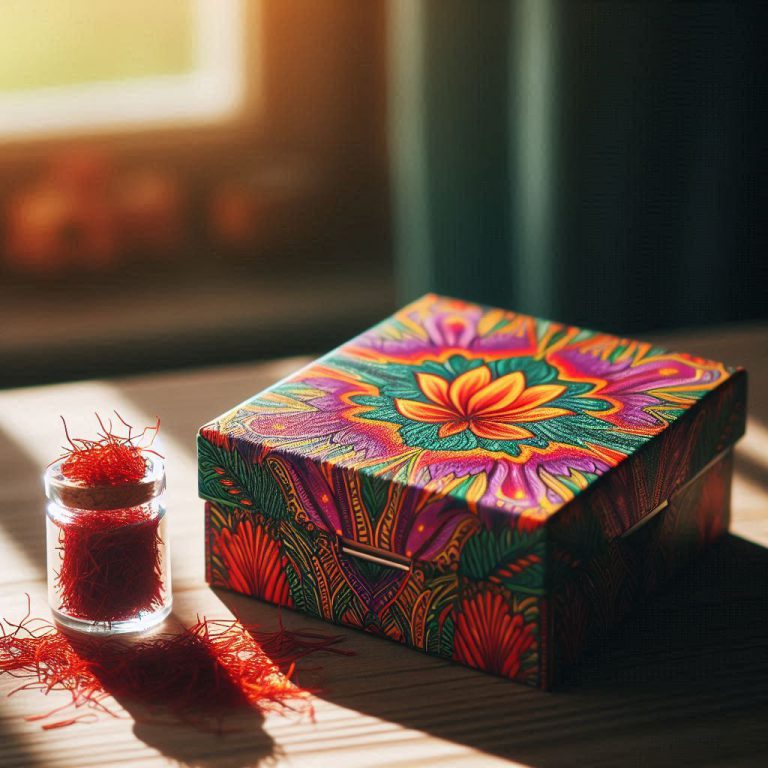
Kowsaj’s paper and cardboard packaging features distinctive designs and attractive color schemes, enhancing the presentation and overall appeal of the saffron received by customers.


